
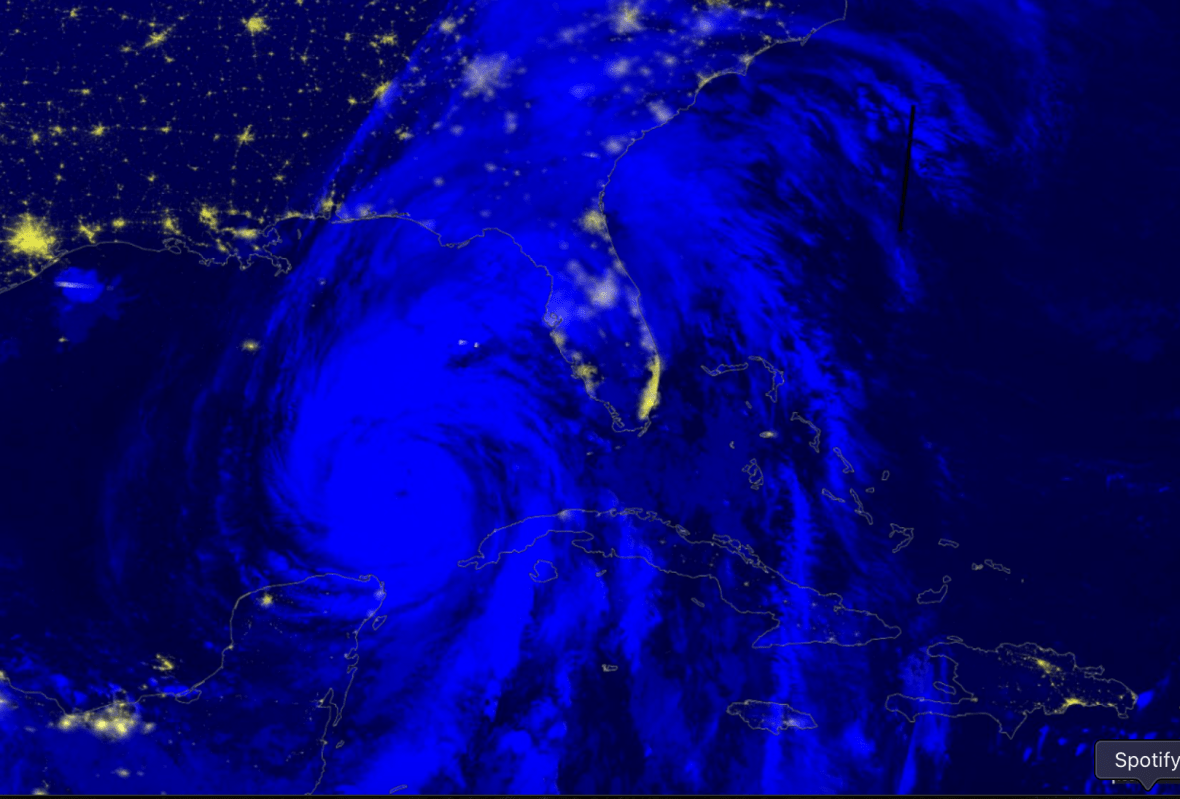
All of our friends affected by Hurricane Helene have checked in and are safe. We are safe, and the river here only got to its regular high water levels. They didn’t even have to cancel kids soccer today. But watching the devastation around us unfold reminds me of the aftermath of the Gatlinburg fire in 2016.
I’m acutely aware that as a river bank dweller the devastation could have been overwhelming to us personally if we’d been hit like other areas throughout the southeast and over the mountain.
Perhaps geographically we are relatively safer being closer to the headwaters than further downstream, but I don’t ever want to do guesswork with rivers in the age of climate intensification. We still have a long way to go toward implementing large-scale climate and sustainability solutions THAT ALREADY EXIST.
One-thousand-year-flood events are not natural disasters, they are fossil fuel disasters.
I used to let climate deniers boil my blood because I thought they were more relevant to social change. I’ve revised my thinking around that. Climate scientist and communicator Katharine Hayhoe taught me not to engage with dismissives, even the one in my family who likes to bait me. (How freeing.)
Hayhoe introduced the chart in her book Saving Us: A Climate Scientist’s Case for Hope and Healing in a Divided World. It comes from a 2009 study by Yale Climate Change Communications called Global Warming’s Six Americas. The data has been updated and they can now track changes in attitudes around climate change over time.

The good news, if there is any, is that the group of people who identify as “climate alarmed” and “climate concerned” is steadily growing. (Channeling climate anxiety in healthy ways is another thing entirely, but I think being alarmed is generally a really good, sober place to be on this topic.)
In the chart, the group to influence is the group immediately to the right of your circle. (That’s also incredibly freeing because when it comes to certain family I can just let a lot of stuff slide by and know that my work is already cut out for me in areas where I have influence. Why drain my batteries on people who just want to slow me down? Makes no sense.)
The people I might be able to influence on the subject are always climate-concerned, not the trolls, nor even the disengaged. Knowing that has refined my focus for what I can give my energy to and keep myself sane.
If you’re alarmed by extreme weather events, then maybe you feel powerlessness. I’m sorry, because I feel that too sometimes, if I’m honest. But I try not to let myself feel overwhelmed by powerlessness for too long. I have too many friends doing good work in intersecting movements to let myself feel like I have to carry all that alone. I know that community resilience is much stronger than whether or not my neighbor believes in climate change, because chances are that if we care about saving the land, then we can find ways to collaborate regardless of science and discourse.
A simple search in my local paper’s archives shows only 419 stories with the keyword “climate change” since 1997. That’s not a lot, in my opinion.
One thing an empowered citizen can do is track how their local media is covering the topic. Are reporters even mentioning climate change in disaster stories? Do they mention its root causes? Are they up-to-date on the latest science? Do they mention the decades of climate deception we had to wade through to even be talking realistically about policy??
If reporters are not treating extreme weather events with the depth and context that’s needed, then write a letter to the editor, dang it. Make some noise. It’s not that I think that a letter to the editor or more climate news will save us, but changes in attitudes will help us face the crisis collectively and turn more people toward solutions that build resilient communities. Social changes can ensure we can keep fighting for policies that transform society and make polluters pay.
For excellent grassroots reporting on the devastation caused by Helene, read the rolling updates from Hellbender Press.
 Élan Young